For the purposes of satisfying the qualification requirement relating to PPP project experience, it is relevant that the project achieved financial close no more than ten years prior to the submission deadline for the qualification documents. The date on which an investment fund acquired the project is not relevant if the fund was not involved in the project from the execution of the PPP Agreement. What is relevant is whether the investment fund acquired the project by assuming the obligations of the former private partner and stepping into the position of the private partner under the PPP Agreement.
The services comprised within a PPP Agreement – design, build, finance, maintain, and operate, are traditionally provided under separate and independent service contracts. In practice, these services are often delivered by different service providers at different times, in different sequences, and without any contractual interdependence. However, entering into multiple separate contracts for each individual service does not provide an effective mechanism for managing risks and allocating responsibility for issues arising from the combined use of all these services under a single contractual framework for the implementation of one project.
The synergies achieved in risk management and the allocation of responsibilities distinguish a PPP Agreement from the mere aggregation of several traditional but separate service contracts performed sequentially. An integrated approach to the full range of services included in a PPP Agreement enables the development of innovative solutions for the early mitigation, management, or even elimination of risks. These solutions are reflected in the bidders' Best and Final Offers (BAFOs), specifically in the financial models forming part of such offers, which are prepared based on the respective bidders' final technical proposals.
Recognising the specific nature of a PPP Agreement as an instrument for risk allocation and risk management, the qualification requirements require bidders to demonstrate experience in the performance of PPP Agreements. The purpose of the qualification requirement is not to verify experience in separate and unrelated activities, such as design, construction, maintenance, insurance, or similar services, accumulated from different projects. Rather, the objective is to ensure experience in delivering an integrated PPP project under a single contractual framework.
Accordingly, the qualification requirement may only be satisfied through PPP project experience possessed by the private partner in the relevant reference PPP project or by any single economic operator forming part of that private partner. The qualification requirement cannot be satisfied by combining unrelated experience in individual project components drawn from different projects or different economic operators.
The cost assumptions are result of detailed and extensive analyses and incorporate inflation.
Basements are not part of the current scope, and no change is foreseen. They may be considered as an optional enhancement at the private partner’s initiative.
The 2.7 m height remains as specified in the technical requirements.
The number of stories is at the private partner’s discretion, provided the unit programme, technical specifications are met and it is as per Latvian regulations.
The public partner provides engineering surveys as indicative information. The private partner may carry out additional surveys during the procurement procedure to verify ground and topographical conditions for the preparation of a more detailed offer
The public partner will review the opportunity to prepare arboricultural surveys where appropriate.
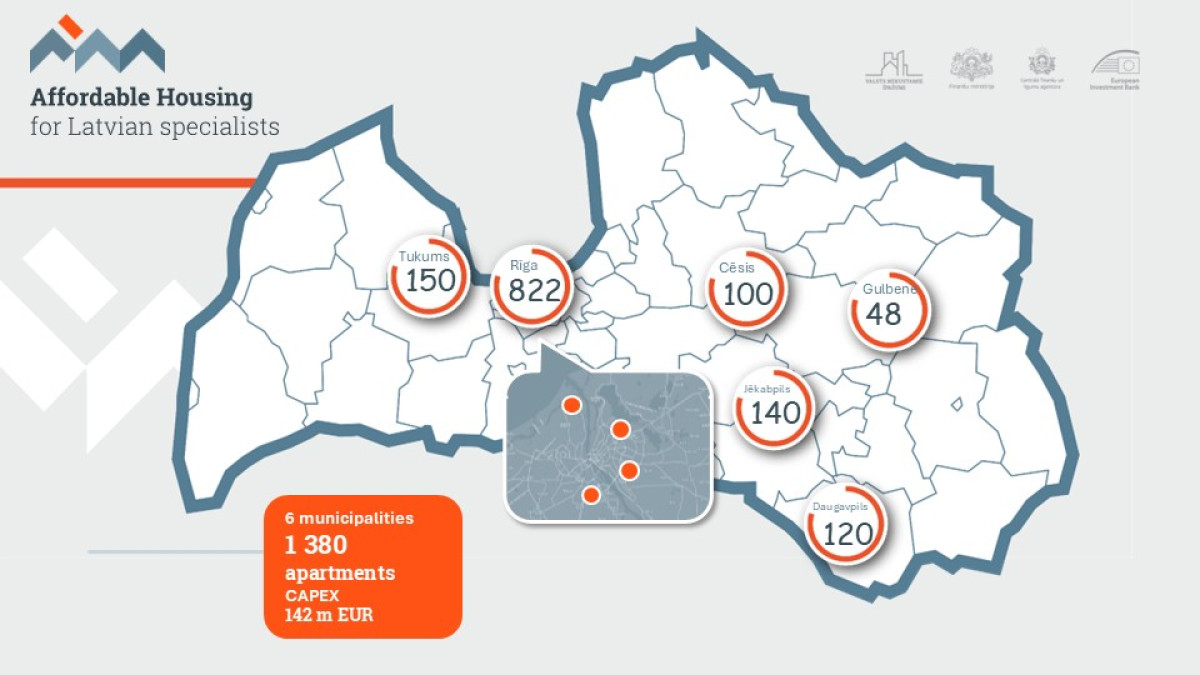
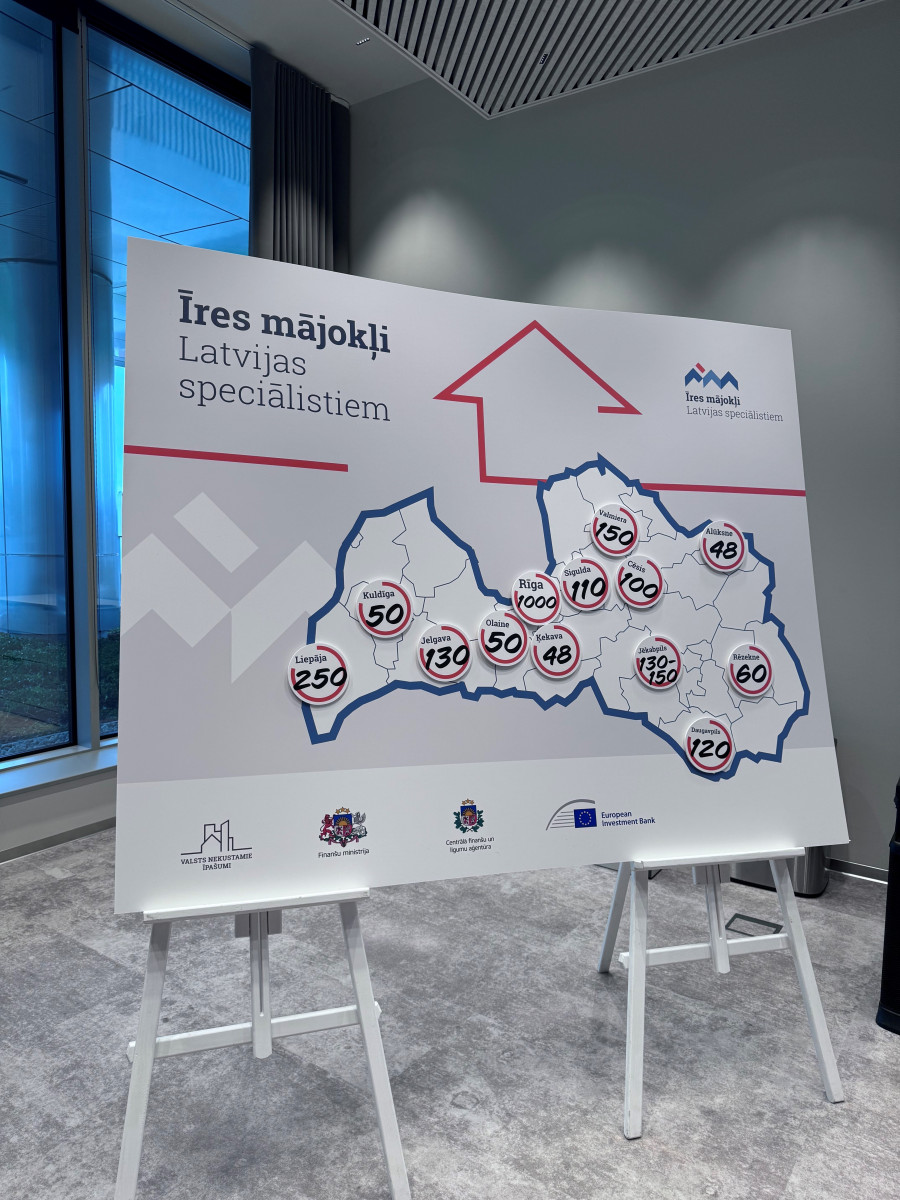
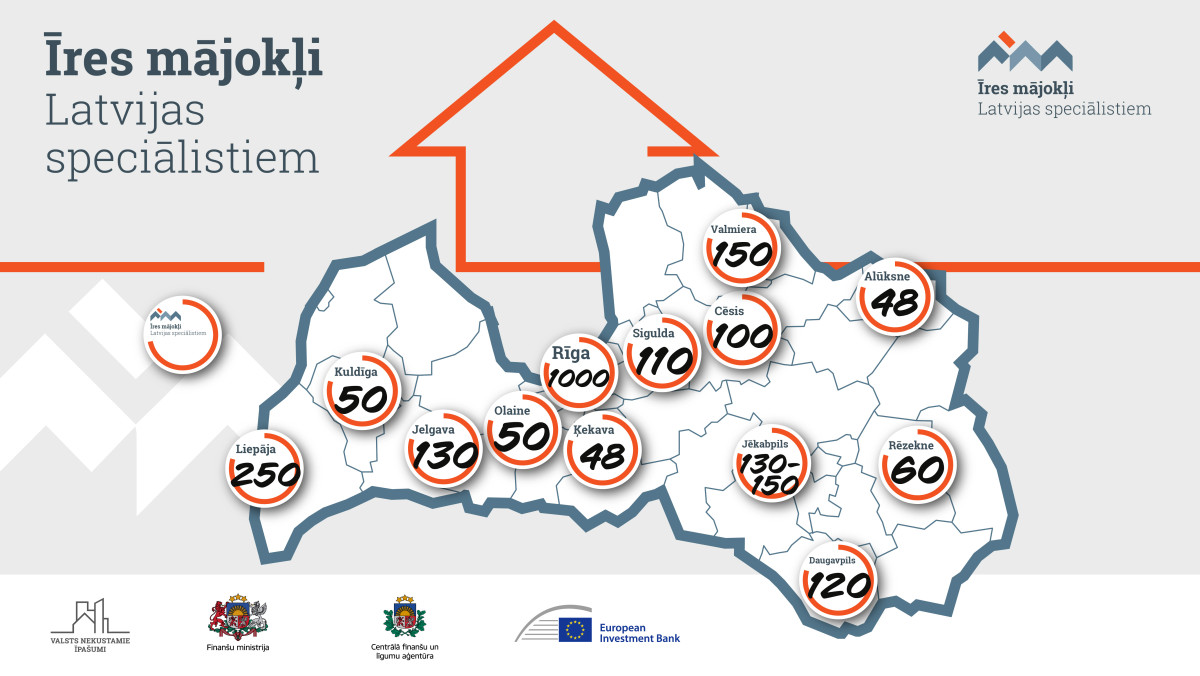
The participating municipalities are committed to the programme. SRE will facilitate coordination with the relevant municipal departments to support timely decision-making. However, responsibility for the design and construction, including completion of construction by the proposed date, lies with the private partner.
Third-party damage is addressed within the PPP contract
The Private Partner's sole revenue stream under the Contract is the Availability Payment, payable quarterly by the Public Partner for so long as the asset meets the contractually defined Availability and Performance Requirements. All parties are expected to honour the PPP contract without any government or municipal guarantee.
Turnover and Assets under Management are different types of measures of the financial and economic standing depending on company type. Turnover is the applicable metric for developers, construction companies, and similar industry-related contracting entities. While assets under Management are the applicable metric for funds and institutional investors. A Candidate (or Consortium member) must satisfy the threshold using only that one specific metric that corresponds to the type of the respective company or fund. These metrics are not interchangeable or supplementary to each other.
The Candidate may, at its discretion, satisfy the requirement regarding either consolidated annual turnover (for example, construction companies, real estate developers, etc.) or assets under management (for example, various types of investment funds) by submitting documentation demonstrating the Candidate’s compliance with the relevant criterion.
SJSC “State Real Estate” is the largest manager of Latvia’s greatest assets – land and buildings. Land and cultural heritage, old and modern buildings, state border and customs infrastructure – all of these are national treasures for the people of Latvia.















-large.jpg)
-large.jpg)
-large.jpg)
-large.jpg)
-large.jpg)
-large.jpg)
-large.jpg)
-large.jpg)
-large.jpg)
-large.jpg)
-large.jpg)
-large.jpg)
-large.jpg)


-thumbnail.jpg)